El Polen y la construcción de lo andino
música fusión e imaginarios identitarios en la Lima cosmopolita de la década de 1970
DOI:
https://doi.org/10.65296/rrh.5.1.52Palabras clave:
El Polen, música andina, musicología, rock peruano, sociología de la músicaResumen
El Polen es una de las agrupaciones más relevantes latinoamericanas del rock fusión. La presente investigación busca contribuir con la exploración académica sobre el rock peruano en general, y sobre esta etapa en particular. Tiene como objetivo principal comprender cómo esta banda construyó un concepto de “lo andino” para integrarlo a su imaginario musical de “fusión” en Lima. Se analizan dos objetivos específicos: Estudiar cuál es la concepción de música andina en la fusión “rock - música andina” de El Polen y explicar cómo esta concepción de “lo andino” se expresa en la elección de géneros, ritmos, formas musicales, así como en la instrumentación y la performance. La investigación expone los siguientes factores: (1) El discurso del indigenismo en la dictadura de Juan Velasco Alvarado, que partía de discursos paternalistas y tutelares en donde lo indígena era asumido como lo oriundo de la nación, pero que estarían en un estado de inferioridad política y cultural, este indigenismo mientras reivindica las culturas indígenas en la conformación de la nación por otro lado construye mitológica y nostálgicamente un pasado pre colonial; (2) la existencia de un cambio de paradigma hacia la mitad del siglo XX, bajo el cual ya no se hablaba de música incaica sino de música andina, este discurso reflejaba ciertas imágenes de redención del héroe (3) la reinterpretación del discurso hippie a la convulsión social peruana de la época, sumado al uso de alucinógenos, propia de esta práctica, llevaría a los músicos a experimentar nuevas exploraciones sonoras y transformaciones musicales. Todos estos factores hicieron posible la construcción de un concepto de lo andino que sintonizaría con un imaginario musical de “fusión”.
Descargas
Biografía del autor/a
-
Jorge Aurélio De Souza Pacheco, Universidad Científica del Sur
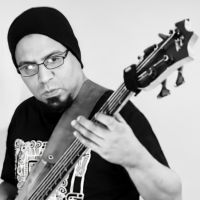
Jorge Aurelio de Souza Pacheco es sociólogo y magíster en Musicología por la Pontificia Universidad Católica del Perú. Músico, docente e investigador, desarrolla su actividad en torno a la interpretación, la enseñanza y el estudio de la música popular. Ha colaborado con destacados artistas y elencos peruanos y desarrollado proyectos vinculados al metal progresivo y las sonoridades andinas. Es docente de la Academia MasterMusic y de la Universidad Científica del Sur. Como musicólogo, ha publicado artículos y participado en congresos especializados. Sus líneas de interés comprenden la música criolla y afroperuana, la fusión, el rock progresivo y el metal.
Referencias
Cornejo, C. (29 de noviembre de 2014). Entrevista a Juan Luis Pereira del Mar - El Polen. [Video]. YouTube. https://www.youtube.com/watch?v=Cm-YsEVRrAE&t=53s
Cortés Stefanoni, J. (2013). El rock progresivo y la contracultura. Analéctica, 1-8. https://doi.org/10.5281/zenodo.3820864
De Souza Pacheco, J. A. (2022). La construcción de lo andino en el imaginario musical fusión de la banda El Polen en la Lima cosmopolita de la década de 1970 [Tesis de Maestría en Musicología, Pontificia Universidad Católica del Perú]. Repositorio Digital de Tesis y Trabajos de Investigación PUCP. http://hdl.handle.net/20.500.12404/24081
Ferrier, C. (2010). El huayno con arpa: estilos globales en la nueva música popular andina. Instituto de Etnomusicología, Pontificia Universidad Católica del Perú. https://books.openedition.org/ifea/6198
González Rodríguez, J. P. (1986). Hacia el Estudio Musicológico de la Música Popular Latinoamericana. Revista Musical Chilena, 40 (165), 59-84. https://revistamusicalchilena.uchile.cl/index.php/RMCH/article/view/13288
González, J. P. (2012). Vanguarda primitiva no rock chileno dos anos setenta: música, intelectuais e contracultura. Música Popular Em Revista, 1(1), 75-92. https://doi.org/10.20396/muspop.v1i1.12877
González, J. P. (2017). Des/encuentro en la música popular chilena 1970- 1990. Santiago de Chile: Universidad Alberto Hurtado.
López Ramírez Gastón, J. I. (2019). La guardia nueva: visiones sobre la música electrónica en el Perú. Instituto de Etnomusicología, Pontificia Universidad Católica del Perú.
Matos Mar, J. (1984). Desborde popular y crisis del Estado. Instituto de Estudios Peruanos.
Mendívil, J. (2015). Lima es muchas Limas. Primeras reflexiones para una cartografía musical de Lima a principios del siglo XXI. En R. Romero (Ed.), Música Popular y sociedad en el Perú contemporáneo (pp. 17-46). Instituto de Etnomusicología, Pontificia Universidad Católica del Perú.
Mendívil, J. (2018). Cuentos fabulosos: la invención de la música incaica y la escritura de la historia en etnomusicología. Instituto de Etnomusicología, Pontificia Universidad Católica del Perú.
Mora Más, P. (2018). Movimiento de contracultura: El movimiento hippie [Treball Final de Grau en Humanitats: Estudis Interculturals, Universitat Jaume I]. http://hdl.handle.net/10234/177791
Cambiasso, N. (2014). Vendiendo Inglaterra por una libra: Una historia social del rock progresivo. Gourmet Musical Ediciones.
Rohner, F. (2018). La Guardia Vieja: el vals criollo y la formación de la ciudadanía en las clases populares (1885-1930). Instituto de Musicología, Pontificia Universidad Católica del Perú.
Martín-Sánchez, J. (2011). Indigenismo bifronte en el gobierno peruano de Velasco Alvarado: continuidad y alternativa, sierra y selva. En L. Girador, & J. Martín-Sánchez (Eds.), La ambivalente historia del indigenismo (pp. 191-250). Instituto de Estudios Peruanos.
Torres Rotondo, C. (2009). Demoler. Un viaje personal por la primera escena del rock en el Perú (1957-1975). Revuelta Editores.
Torres Rotondo, C. (2018). Demoler. El Rock en el Perú 1965-1975. Planeta.
Discografía
El Polen. (1972). Cholo [Álbum]. El Virrey.
El Polen. (1973). Fuera de la ciudad [Álbum]. El Virrey.
Publicado
Número
Sección
Licencia
Derechos de autor 2026 Jorge Aurélio De Souza Pacheco (Autor/a)

Esta obra está bajo una licencia internacional Creative Commons Atribución-NoComercial-CompartirIgual 4.0.
Los conceptos expresados en los artículos científicos incluidos en esta edición son de responsabilidad exclusiva de sus autores y no reflejan necesariamente los criterios institucionales.
Los autores conservarán sus derechos de autor y garantizarán a la revista el derecho de primera publicación de sus trabajos.