El Polen and the Construction of Andean Identity
Musical Fusion and Identity Imaginaries in 1970s Cosmopolitan Lima
DOI:
https://doi.org/10.65296/rrh.5.1.52Keywords:
andean music, El Polen, musicology, peruvian rock, sociology of musicAbstract
El Polen is one of the most significant groups in the Latin American rock fusion movement. This research seeks to contribute to academic exploration of Peruvian rock in general, and of this particular stage of its development. Its main objective is to understand how the band constructed a concept of "the andean" and integrated it into its musical imaginary of "fusion" in Lima. Two specific objectives are analyzed: first, to examine the conception of andean music within El Polen's "rock–andean music" fusion; and second, to explain how this conception of "the andean" is expressed in the band's choice of genres, rhythms, and musical forms, as well as in instrumentation and performance. The research addresses the following factors: (1) the discourse of indigenismo under the dictatorship of Juan Velasco Alvarado, which was grounded in paternalistic and tutelary narratives in which indigenous identity was regarded as the nation's autochthonous origin, yet was simultaneously cast in a position of political and cultural inferiority; this indigenismo, while asserting the role of indigenous cultures in the formation of the nation, simultaneously constructed a mythologized and nostalgic vision of a pre-colonial past; (2) a paradigm shift occurring around the mid-twentieth century, whereby discourse no longer referred to "Incaic music" but rather to "andean music," a shift that reflected certain imagery of heroic redemption; and (3) the reinterpretation of hippie discourse within the context of Peru's social upheaval at the time, which, combined with the use of hallucinogens characteristic of this practice, led musicians toward new sonic explorations and musical transformations. Together, these factors enabled the construction of a concept of "the andean" that would resonate with a musical imaginary of "fusion".
Downloads
Author Biography
-
Jorge Aurélio De Souza Pacheco, Universidad Científica del Sur
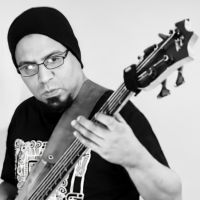
Jorge Aurelio de Souza Pacheco is a sociologist and holds a master’s degree in musicology from the Pontifical Catholic University of Peru. As a musician, teacher, and researcher, his work centers on the performance, teaching, and study of popular music. He has collaborated with prominent Peruvian artists and ensembles and developed projects related to progressive metal and Andean sounds. He teaches at the MasterMusic Academy and the Universidad Científica del Sur. As a musicologist, he has published articles and participated in specialized conferences. His areas of interest include Creole and Afro-Peruvian music, fusion, progressive rock, and metal.
References
Cornejo, C. (29 de noviembre de 2014). Entrevista a Juan Luis Pereira del Mar - El Polen. [Video]. YouTube. https://www.youtube.com/watch?v=Cm-YsEVRrAE&t=53s
Cortés Stefanoni, J. (2013). El rock progresivo y la contracultura. Analéctica, 1-8. https://doi.org/10.5281/zenodo.3820864
De Souza Pacheco, J. A. (2022). La construcción de lo andino en el imaginario musical fusión de la banda El Polen en la Lima cosmopolita de la década de 1970 [Tesis de Maestría en Musicología, Pontificia Universidad Católica del Perú]. Repositorio Digital de Tesis y Trabajos de Investigación PUCP. http://hdl.handle.net/20.500.12404/24081
Ferrier, C. (2010). El huayno con arpa: estilos globales en la nueva música popular andina. Instituto de Etnomusicología, Pontificia Universidad Católica del Perú. https://books.openedition.org/ifea/6198
González Rodríguez, J. P. (1986). Hacia el Estudio Musicológico de la Música Popular Latinoamericana. Revista Musical Chilena, 40 (165), 59-84. https://revistamusicalchilena.uchile.cl/index.php/RMCH/article/view/13288
González, J. P. (2012). Vanguarda primitiva no rock chileno dos anos setenta: música, intelectuais e contracultura. Música Popular Em Revista, 1(1), 75-92. https://doi.org/10.20396/muspop.v1i1.12877
González, J. P. (2017). Des/encuentro en la música popular chilena 1970- 1990. Santiago de Chile: Universidad Alberto Hurtado.
López Ramírez Gastón, J. I. (2019). La guardia nueva: visiones sobre la música electrónica en el Perú. Instituto de Etnomusicología, Pontificia Universidad Católica del Perú.
Matos Mar, J. (1984). Desborde popular y crisis del Estado. Instituto de Estudios Peruanos.
Mendívil, J. (2015). Lima es muchas Limas. Primeras reflexiones para una cartografía musical de Lima a principios del siglo XXI. En R. Romero (Ed.), Música Popular y sociedad en el Perú contemporáneo (pp. 17-46). Instituto de Etnomusicología, Pontificia Universidad Católica del Perú.
Mendívil, J. (2018). Cuentos fabulosos: la invención de la música incaica y la escritura de la historia en etnomusicología. Instituto de Etnomusicología, Pontificia Universidad Católica del Perú.
Mora Más, P. (2018). Movimiento de contracultura: El movimiento hippie [Treball Final de Grau en Humanitats: Estudis Interculturals, Universitat Jaume I]. http://hdl.handle.net/10234/177791
Cambiasso, N. (2014). Vendiendo Inglaterra por una libra: Una historia social del rock progresivo. Gourmet Musical Ediciones.
Rohner, F. (2018). La Guardia Vieja: el vals criollo y la formación de la ciudadanía en las clases populares (1885-1930). Instituto de Musicología, Pontificia Universidad Católica del Perú.
Martín-Sánchez, J. (2011). Indigenismo bifronte en el gobierno peruano de Velasco Alvarado: continuidad y alternativa, sierra y selva. En L. Girador, & J. Martín-Sánchez (Eds.), La ambivalente historia del indigenismo (pp. 191-250). Instituto de Estudios Peruanos.
Torres Rotondo, C. (2009). Demoler. Un viaje personal por la primera escena del rock en el Perú (1957-1975). Revuelta Editores.
Torres Rotondo, C. (2018). Demoler. El Rock en el Perú 1965-1975. Planeta.
Discografía
El Polen. (1972). Cholo [Álbum]. El Virrey.
El Polen. (1973). Fuera de la ciudad [Álbum]. El Virrey.
Downloads
Published
Issue
Section
License
Copyright (c) 2026 Jorge Aurélio De Souza Pacheco (Autor/a)

This work is licensed under a Creative Commons Attribution-NonCommercial-ShareAlike 4.0 International License.
The views and opinions expressed in the scientific articles included in this issue are the sole responsibility of their authors and do not necessarily reflect the views or institutional positions of the journal.
Authors retain the copyright to their works and grant the journal the right of first publication.